.png)


Don't Let Your Fence Fall Apart: A Guide to Rotten Posts
- Jake Bunston
- Mar 25
- 8 min read

Why a Rotten Fence Post Is a Bigger Problem Than It Looks

A rotten fence post is one of the most common and most underestimated problems facing Melbourne homeowners. What starts as a small patch of soft timber at ground level can quickly compromise your entire fence line, creating safety risks, reducing privacy, and hurting your property's kerb appeal.
Here is a quick summary of what to do if you have a rotten fence post:
Test the post by pressing a screwdriver into the base. Spongy or crumbling wood means rot is present.
Check for leaning by pushing the post firmly. Any give signals structural failure.
Look for visible signs including discolouration, dark spots, fungal growth, or a musty smell at ground level.
Assess the damage to determine whether a single post or multiple posts are affected.
Contact a professional for a proper assessment and lasting replacement, rather than a temporary fix.
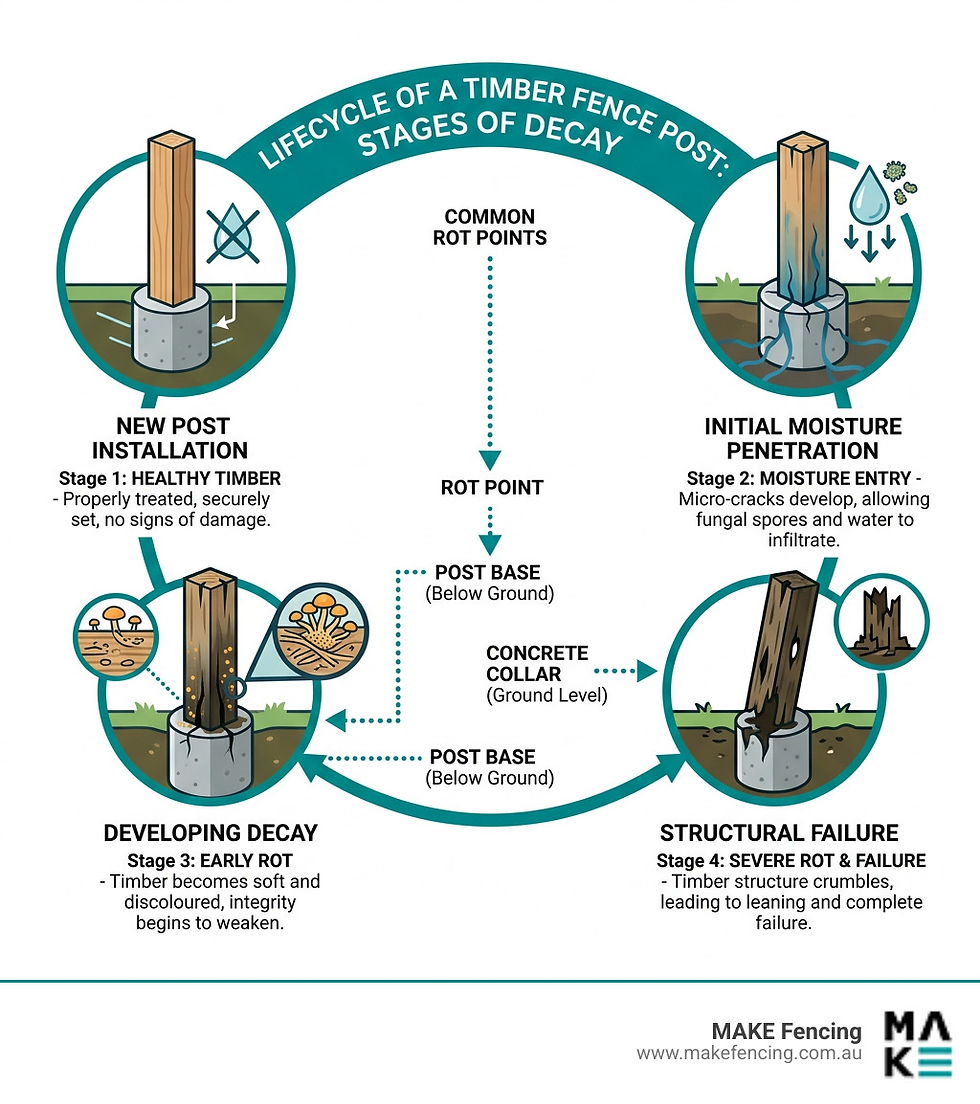
Melbourne's four-season climate is tough on timber. Rapid swings from summer heat to winter rain cause wood to expand and contract repeatedly. Over time, that movement opens up small cracks, and once moisture gets in, bacteria and fungi do the rest. The result is a post that looks fine on the surface but is quietly failing from the ground up. If you want to understand the full scope of what is involved in keeping your fence in top condition, our guide to fence repairs in Melbourne is a great place to start.
I'm Jake Bunston, founder of Make Fencing, and over the past seven years I've seen just how much damage a single rotten fence post can cause if it is left too long. Dealing with rotten fence posts is one of the most common repair jobs we handle across Melbourne suburbs, and the fix is almost always more involved than homeowners expect.
Signs You Have a Rotten Fence Post
Identifying a rotten fence post before your entire fence ends up in your neighbour's yard is essential for maintaining your property's value. In Melbourne, we often see timber fences that look perfectly fine from a distance, but the structural "bones" are quietly deteriorating. Because most decay happens right where the timber meets the soil or concrete, it is easy to miss until a heavy wind hits.
We have found that moisture exposure is the primary culprit. When water pools around the base of a post, it creates a breeding ground for fungi. If your fence is located in a shaded area or near a garden bed with poor drainage, the risk of rot increases significantly. For those looking for more detailed insights into restoring the look of their boundary, check out our resources on timber fence repairs Melbourne.

1. Identifying a Rotten fence post early
The best way to catch rot before it becomes a catastrophe is the "Screwdriver Test." Take a flat-head screwdriver and press it firmly into the timber at the very base of the post, just below the soil line. If the wood feels hard and resistant, you are likely in the clear. However, if the screwdriver sinks in easily or the wood crumbles away like wet cake, you have a rotten fence post.
We also recommend looking for discolouration. Dark, water-soaked patches or yellow and grey stains are often precursors to mould and fungal growth. In some cases, you might even notice a musty, earthy smell near the base.
Given Melbourne’s humidity and frequent rain, these early warning signs are your cue to act before the structural integrity of the fence is compromised. We suggest pushing against each post individually; a sturdy post should offer strong resistance, while a failing one will feel "spongy" or loose.
2. Structural Instability and Leaning
Have you noticed your fence looking a bit "tired" or leaning at an angle? This is rarely just an aesthetic issue. A leaning fence is often a direct result of a rotten fence post that can no longer support the weight of the panels. In suburbs like Brighton or Port Melbourne, the coastal air and wind can put immense pressure on these weakened structures.
When a post loses its grip on the ground, the entire run of the fence becomes a sail in the wind. This puts unnecessary stress on the remaining healthy posts, potentially causing a domino effect. If your fence sways when you lean on it or rattles during a storm, the structural integrity is gone.
Proper installation is the only way to prevent this from recurring, which we cover extensively in our fence post installation complete guide. Whether you have classic Victorian weatherboards or a modern home, a leaning fence is a major safety risk for children and pets.
3. The Hidden Dangers of Ground-Level Decay
The most dangerous type of rot is the kind you cannot see. Bacteria and fungi penetrate the wood fibres most aggressively at the "transition zone", the point where the post exits the concrete footing or soil. Water often pools in small gaps between the timber and the concrete, creating a permanent damp environment.
We know that fluctuations in temperature or moisture can cause the fence panel or even the ground below it to expand, contract, and shift. This movement can lead to breakage or allow pests like termites to find easy entry points. Large cracks in the wood are basically "welcome" signs for burrowing insects. Once the internal structure is hollowed out by rot and pests, the post can snap at ground level without any warning, leading to a total structural failure.

Why Professional Replacement Outperforms DIY Fixes
When you discover a rotten fence post, it is tempting to look for a quick patch like a bracket, extra concrete, or a "support" stake. In my experience, those fixes rarely deal with the real cause, which is usually trapped moisture, poor drainage, or a post that was not set correctly in the first place. At Make Fencing, we look at fencing through the lens of Total Cost of Ownership. A short-term patch often becomes a repeat problem that costs more in time, stress, and ongoing repairs.
A professional replacement means we can remove the failed section properly, check what is happening under and around the post, and rebuild it so the surrounding fence line stays straight, safe, and secure. That is what delivers long-term value and genuine peace of mind. For ongoing care once your fence is back in shape, you can refer to our fence maintenance ultimate tips to extend the life of your new installation.
If you would like a simple, trustworthy overview of how timber decay works and why moisture matters so much, this external reference is a helpful starting point: Wood-decay fungus.
1. The Risks of DIY Rotten Fence Post Repair
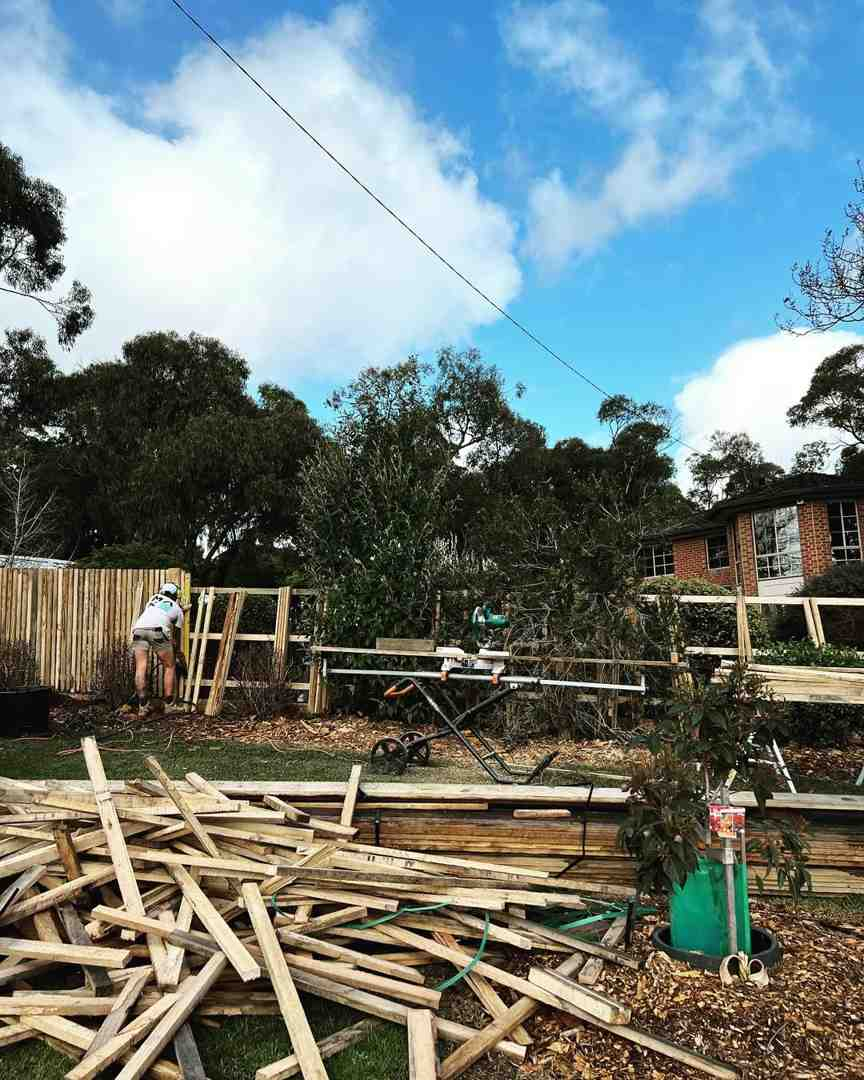
Trying to fix a rotten fence post yourself comes with a few hidden challenges that are easy to underestimate. Removing an old post set in concrete can be heavy, awkward work, and the fence often needs to be safely supported while that post is taken out. Without the right bracing and a clear plan, a section of fence can drop, twist, or pull other posts out of line.
Temporary solutions like metal stakes or repair brackets also depend on having solid timber left to grab onto. If the core of the post has already broken down at ground level, there is often nothing sound for a bracket to bite into. Another common issue is depth and drainage. If a replacement post is not set deep enough, or if water can still pool around the base, the fence may start leaning again far sooner than you would expect.
2. Our Expert Process for Lasting Results
At Make Fencing, I have refined a process that keeps your fence straight, strong, and "Rotten No More" for the long haul. We don't just swap a post and hope for the best, we rebuild the weak point and address the conditions that caused it.
01. Consultation: We visit your property in suburbs like Balwyn, Doncaster, Ivanhoe, or Lilydale to assess the damage and pinpoint what is driving the decay.
02. Quotation: We provide a clear, detailed quote based on the right materials and the best long-term outcome for your fence line.
03. Assessment and Build: We remove the failed post and footing debris where required, set the new post to suit Melbourne soil conditions (including heavy clay), and finish the footing so water sheds away from the timber instead of sitting against it.
That last detail, shaping the concrete so it falls away from the post, is one of the simplest ways to reduce moisture buildup and extend the life of the repair.
3. Choosing Rot-Resistant Materials for Melbourne Homes
If you are constantly repeating repairs, there are smart material upgrades that reduce rot risk and keep your boundary looking sharp.
Pressure-treated timber is still a great option for many Melbourne homes, but it needs to be suitable for ground contact and installed with proper drainage so it can actually perform over time.
If you want ultimate longevity with a clean, modern finish, we also build steel-framed solutions and install COLORBOND® fencing. These options are low-maintenance, tough in coastal air, and they keep their look without the same decay concerns as timber. If you have an older fence with character that you want to keep, we can also help you restore an old fence by replacing the key structural components with more resilient materials.
Common Questions About Fence Post Decay
How can I tell if my fence post is rotting below the ground? We recommend the screwdriver test at the base of the post. If the wood feels spongy or crumbles easily just below the soil line, it is a clear sign of advanced decay. You can also look for "fuzz" or fungal growth, which indicates active rot.
Is it better to repair or replace a leaning post? While some minor leaning can be braced if the post is still healthy, a post leaning due to rot has lost its structural integrity. We always advise a full replacement to ensure the safety of your family and the longevity of the entire fence line. A "repaired" rotten post is often just a ticking time bomb.
How does Melbourne’s weather affect timber posts? Our local climate, with its rapid shifts from high heat to heavy rain, causes timber to expand and contract. This movement can create small cracks that allow moisture and bacteria to settle, leading to rot if the posts are not professionally installed and sealed. Suburbs with higher humidity or coastal air see rot progress much faster.
Can I stop rot from spreading to other posts? Rot is often a result of local soil conditions and drainage. If one post has failed, others are likely under similar stress. A professional assessment from us can determine if a single replacement or a wider upgrade is necessary to protect your property. Keeping vegetation and mulch away from the base of your posts can also help slow the spread.
Secure Your Property with Expert Craftsmanship
If you have noticed your fence swaying in the wind or seen signs of decay at the base of your timber, do not wait for a total collapse. A rotten fence post is more than an eyesore; it is a structural failure waiting to happen. At Make Fencing, we provide tailored, high-quality solutions that blend style with ultimate durability to ensure your home remains secure and beautiful for years to come.
Whether you are in Blackburn, Coburg, or Lilydale, our team is ready to help you build a fence that stands the test of time. Contact us today for a professional assessment and quote.


