.png)


Timber vs Colorbond Fencing

The Timber vs Colorbond Fencing Decision Every Melbourne Homeowner Faces
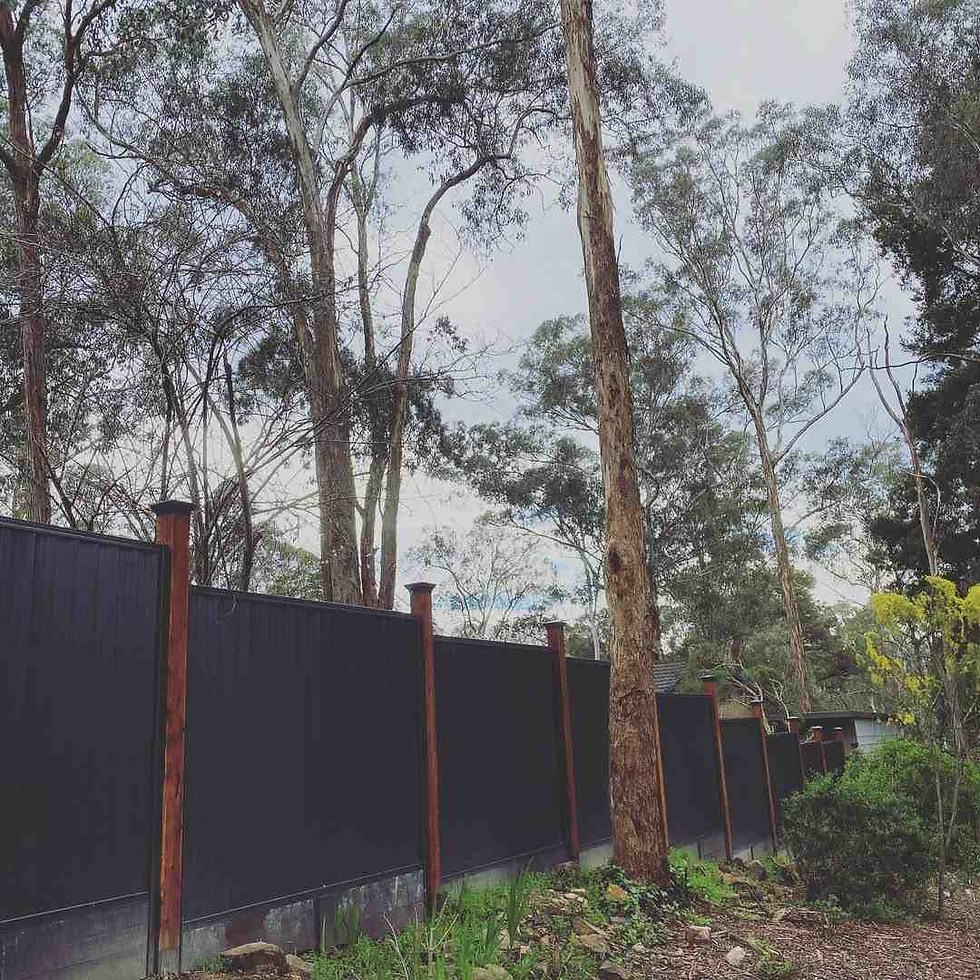
When it comes to timber vs Colorbond fencing, most Melbourne homeowners want a straight answer. To help you decide, I have compared these materials across the following key areas:
Durability and Performance in Melbourne
Comparing Timber vs Colorbond Fencing Lifespan
Maintenance and Long-Term Value of Timber vs Colorbond Fencing
Privacy, Security, and Design Aesthetics
Performance in Coastal and Bushfire-Prone Areas
Environmental Sustainability and Eco-Friendly Choices
Secure Your Home with a Professional Installation
Choosing a fence is one of the bigger decisions you make as a homeowner. It affects your privacy, your security, your kerb appeal, and the long-term value of your property. Get it right and you have a fence that works for decades. Get it wrong and you're looking at costly repairs or a full replacement sooner than you expected.
In this guide, I break down exactly how timber and Colorbond compare across these categories so you can make a confident, informed decision. For tailored advice and a detailed quote, contact our team at Make Fencing or explore our residential fencing services.
I'm Jake Bunston, founder of Make Fencing, and over more than seven years of installing both materials across Melbourne, I've seen first-hand where each one excels and where it falls short in the timber vs Colorbond fencing debate. That on-the-ground experience is what shapes every recommendation in this guide.

Durability and Performance in Melbourne
In Melbourne, our fences have to work hard. From the damp winters to the scorching summer sun, its Melbourne we can see all seasons in one day, so the material you choose needs to withstand significant environmental pressure. When we look at timber vs Colorbond fencing, durability is often the first thing clients ask about.
Colorbond steel is a powerhouse in the Australian climate. It is manufactured using a Zincalume steel core, which is highly resistant to corrosion. This is then finished with a baked-on paint coat that won't peel or crack under the UV rays of a Melbourne summer. It is also completely immune to termites, which is a significant factor if you live in high-risk zones commonly found throughout Melbourne.
Timber, on the other hand, is a natural product. While it offers a classic look, it is susceptible to the elements. Most boundary fences use treated pine (H4 or H5 rated for in-ground use) to resist rot and insects. You can learn more about the 6 things you should know about timber vs Colorbond fencing to see how these materials stack up.

Comparing Timber vs Colorbond Fencing Lifespan
When we talk about the lifespan of timber vs Colorbond fencing, there is a clear leader. A well-installed Colorbond fence can easily last 20 to 30 years, often with very little degradation in its structural integrity. It doesn't warp, it doesn't rot, and it doesn't provide a snack for hungry termites.
Timber fences generally have a shorter functional life. A standard treated pine fence might last between 10 and 20 years before the palings begin to warp or the posts start to lean. In Melbourne's clay soils, timber posts are often the first point of failure as moisture traps against the wood. For more details on why steel holds up so well, check out our guide on Colorbond fence benefits..
At Make Fencing, we also offer the option to upgrade all timber fencing projects with steel posts in lieu of traditional timber posts. This upgrade helps significantly extend the lifespan of the fence by reducing the risk of posts rotting, leaning, or failing over time. Steel posts provide greater structural stability, particularly in Melbourne’s reactive clay soils, while still allowing you to achieve the natural look and warmth of a timber fence.
Maintenance and Long-Term Value of Timber vs Colorbond Fencing
This is where the "Total Cost of Ownership" becomes vital. While a basic timber fence might seem like a cheaper option on the day of installation, the long-term costs tell a different story.
Timber requires regular maintenance. To prevent it from greying, cracking, or rotting, you need to oil, stain, or paint it every two to three years. These costs—both in materials and your own time—add up significantly over a decade. If you neglect a timber fence, its lifespan drops dramatically.
Colorbond is the definition of "set and forget." Aside from an occasional hose down to remove cobwebs or salt spray, it requires zero structural maintenance. It doesn't need painting or sealing. When you factor in the cost of maintenance over 15 to 20 years, Colorbond often works out to be the more economical choice.
One consideration with Colorbond fencing, however, is that if a panel becomes damaged, the entire sheet or panel will generally need to be replaced to restore the appearance and structural integrity of the fence. In comparison, timber fencing can often be repaired far more easily by simply replacing a single paling or board rather than an entire section.
You can read more about Colorbond vs timber fencing value or see our tips on classic wood fence care to understand the commitment required for each.
Privacy, Security, and Design Aesthetics
Aesthetics are subjective, but the functional differences in privacy and security are measurable. Colorbond panels are designed to fit together seamlessly, leaving no gaps for prying eyes. This makes them a top choice for security-conscious homeowners in urban areas like Carlton or Fitzroy.
Timber offers a warmer, more natural aesthetic that many feel suits the "garden city" feel of suburbs like Glen Iris or Brighton. However, standard timber palings can shrink or swell with the weather, sometimes creating small gaps between the boards.
In terms of noise, timber is a natural insulator and can be very effective at dampening suburban sounds. Colorbond is also excellent for noise reduction because of its solid, gap-free surface. If you are looking for inspiration, explore our wooden fence designs to see how we blend privacy with style.
Choosing the Best Fence for Your Melbourne Property
Every property has unique needs. If you live in a heritage-protected area in Balwyn or Beaumaris, a sleek metal fence might look out of place, and a traditional timber picket or paling fence would be the better choice to maintain the character of the street.
Conversely, if you have a modern home in a new estate, Colorbond offers a clean, architectural finish that complements contemporary building materials. We also see many homeowners opting for a "hybrid" solution. By using steel posts with timber palings, you get the natural look of wood with a post system that won't rot in the ground. As experienced timber fencing contractors in Melbourne, we can help you navigate these choices.
Performance in Coastal and Bushfire-Prone Areas
Location is a huge factor in the timber vs Colorbond fencing debate. For our clients in coastal areas like Port Melbourne, Flinders, or Hampton, salt air is a constant presence. While timber handles salt well, Colorbond is also specifically designed to resist corrosion. We just recommend a quick wash every few months to keep the salt from sitting on the surface.
In bushfire-prone areas on the fringes of Melbourne, Colorbond is the clear winner. It is a non-combustible material that can act as a barrier against radiant heat and embers. Timber, even when treated, is fuel for a fire. If safety is your priority in a high-risk zone, a professional Colorbond fence installation is the way to go.
Environmental Sustainability and Eco-Friendly Choices
Sustainability is more important than ever. Colorbond steel is 100% recyclable, and because it lasts so long, it creates less waste over time. Timber is a renewable resource, provided it is sourced from responsibly managed forests. However, timber fences often require chemical treatments to prevent rot, and they need to be replaced more frequently than steel. When choosing your material, consider the total environmental impact over the lifetime of the fence.
Secure Your Home with a Professional Installation
No matter which material you choose, the quality of the installation is what determines how long the fence lasts. At MAKE Fencing, we take pride in our craftsmanship. We ensure posts are set deep enough in concrete to handle Melbourne's wind loads and that every panel is perfectly aligned.
We also specialise in custom gate solutions. Whether you need an automated sliding gate for a tight driveway in Northcote or a grand double-swing timber gate for a property in Doncaster, we can tailor a solution to match your new fence perfectly.
Upgrade Your Property with Melbourne’s Fencing Experts
I have spent over a decade helping Melbourne families secure their homes with premium fencing. Whether you prefer the low-maintenance strength of steel or the timeless warmth of wood, we provide tailored solutions that stand the test of time. Ready to transform your boundary? Contact us today for a professional consultation.
FAQ
Which is better for privacy, timber or Colorbond? Colorbond provides a seamless barrier with no gaps, making it excellent for total privacy. Timber can achieve similar results if you choose a lapped and capped design.
Does Colorbond fencing rust in coastal Melbourne areas? Colorbond is designed with a Zincalume core and a baked-on finish to resist corrosion. We recommend a simple hose down twice a year for properties within one kilometre of the ocean to remove salt spray.
How often does a timber fence need maintenance? To keep a timber fence looking its best and prevent rot, I recommend staining or oiling it every two to three years.
Is Colorbond fencing fire-resistant? Yes, Colorbond steel is non-combustible and is an ideal choice for homes in bushfire-prone areas of Victoria.
Can I mix timber and Colorbond materials? We often install hybrid fences using Colorbond steel posts with timber palings. This provides the natural look of wood with the superior ground-level durability of steel posts.
How long does a timber fence last in Melbourne? In Melbourne's varied climate, a treated pine fence usually lasts 10-15 years, while hardwood can last up to 20-25 years with proper care.
Which material is better for a sloped block? Timber is often easier to customise on-site for steep slopes as boards can be cut to follow the ground. Colorbond panels are typically "stepped," which can leave gaps at the bottom that may require extra infill.


